
Founder Spotlight
Founder Spotlight: Michael Salazar Is Building a Fragrance House on His Own Terms
Inside Aromas de Salazar and the independent perfumer’s case for artistry, transparency, and doing things differently.
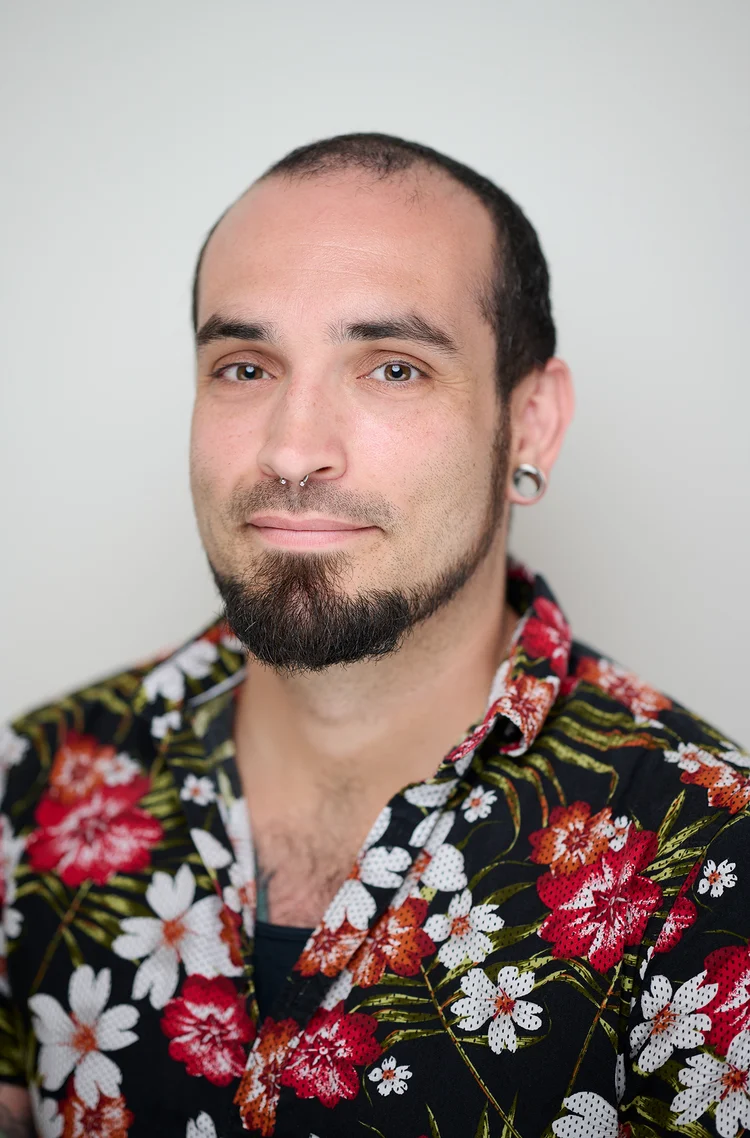
In an industry where fragrance trends can move quickly and familiarity often sells, Michael Salazar has chosen a different path.
As the founder and perfumer behind Aromas de Salazar, the independent fragrance house based in San Diego, Salazar is building a brand around experimentation, education, quality materials, and a willingness to create fragrances that do not necessarily follow the formulas dominating the mainstream market.
His philosophy is straightforward: fragrance should be about more than producing something that simply smells pleasant. It can be an artistic medium, a form of education, and an opportunity to explore materials, memories, history, and ideas through scent.
That philosophy has shaped Aromas de Salazar from its earliest days.
From the Emergency Room to the Fragrance Lab
Salazar's path into perfumery was hardly conventional.
During the COVID-19 pandemic, while working in an emergency room, he began experimenting with fragrance as a hobby. What started as a creative outlet during an extraordinarily intense period gradually became something much larger.
Perfumery gave him a different kind of space to explore.
The hobby became an obsession. The obsession developed into a craft. And eventually, the craft became a business.
That evolution is part of what makes Aromas de Salazar distinctive. Salazar did not enter the fragrance industry through a traditional corporate pathway. He developed his practice independently, learning through experimentation and building a fragrance house around his own creative philosophy.
Today, Aromas de Salazar's catalog reflects that willingness to explore. The brand has developed fragrances across a broad range of styles, with Salazar credited as the perfumer behind the house's creations. Public fragrance databases describe the company as an independent, small-batch fragrance house focused on quality ingredients and handcrafted production.
Rejecting the Pressure to Make Everything Familiar
One of the defining ideas behind Salazar's approach is a resistance to simply reproducing what is already popular.
For an independent perfumer, that can be a meaningful distinction.
Following trends can provide a recognizable path to consumers, but it can also narrow the creative possibilities of the medium. Salazar's work instead embraces unusual combinations, different fragrance structures, natural materials, and compositions that encourage the wearer to experience something less predictable.
That spirit can be seen throughout the Aromas de Salazar catalog.
The house has explored everything from coffee-centered compositions and oud-focused fragrances to chypres, gourmands, florals, tobacco, leather, woods, and other complex materials. A 2022 profile of the brand noted that coffee was among Salazar's favorite perfume materials and highlighted the breadth of his early collection.
The result is a fragrance house that feels less interested in fitting neatly into a category than in expanding the possibilities within it.
The Material Matters
For Salazar, the ingredients themselves are part of the story.
Aromas de Salazar emphasizes quality raw materials and small-batch production, with the brand describing its approach as handcrafted and focused on quality, consistency, and sustainability.
That emphasis becomes especially apparent in some of the house's more historically influenced creations.
The brand's 1882 fragrance, for example, draws from the fougère tradition and incorporates materials including Sicilian bergamot, clary sage, lavender, Bulgarian rose, oakmoss, tobacco blossom, Haitian vetiver, tonka bean, and other ingredients. The fragrance was created by Salazar and released in 2025.
Elsewhere, Aromas de Salazar has explored traditional fragrance structures through a contemporary independent lens. Its Eau de Chypre, for example, incorporates materials including bergamot, Bulgarian rose, orris, patchouli, oakmoss, Haitian vetiver, vanilla, cedar, and other elements.
For Salazar, those materials are not simply items on an ingredient list. They are tools for creating depth, contrast, memory, and character.
Transparency as Part of the Brand
Independent fragrance also presents an opportunity to communicate differently.
Without the layers of a massive beauty conglomerate behind the brand, an independent perfumer can have a more direct relationship with the customer and a more visible role in explaining how and why a fragrance exists.
For Salazar, transparency is part of that relationship.
It means talking about fragrance as a craft rather than presenting it as an inaccessible luxury category. It means educating consumers about materials and composition. And it means allowing the person behind the bottle to remain part of the story.
That educational component is important because fragrance can often feel mysterious by design. Consumers are asked to understand a product through evocative names, imagery, and marketing language while the actual construction of the scent remains difficult to see.
Independent perfumery can open that process up.
Salazar's work demonstrates how a fragrance house can sell a finished product while simultaneously inviting customers deeper into the world that produced it.
Building a House Instead of Chasing a Trend
There is a difference between launching a fragrance and building a fragrance house.
A single successful product can create attention. A house requires a larger vision.
Aromas de Salazar has developed a growing body of work rather than relying on one signature scent to define the brand. Public fragrance databases currently catalog dozens of creations associated with the house, spanning releases from its earliest years through more recent compositions.
That breadth gives Salazar room to experiment.
It also allows the brand to speak to fragrance enthusiasts who are interested in discovery rather than simply purchasing another familiar interpretation of an existing trend.
The house's catalog includes provocative names, historical references, unusual ingredient combinations, and collections that allow different aspects of Salazar's creative identity to emerge.
In that sense, the business is becoming an archive of his development as a perfumer.
Entrepreneurship Through Experimentation
There is another lesson in Salazar's story that extends beyond fragrance.
Entrepreneurship does not always begin with a perfectly formed business plan.
Sometimes it begins with curiosity.
For Salazar, that curiosity emerged during an extraordinarily difficult period and eventually became a discipline. The transition from experimenting at home to developing a fragrance house required not only creative ability, but also the willingness to learn the business side of an industry, develop products, establish a brand, communicate with customers, and continue creating.
That process is particularly relevant to independent founders working in highly established industries.
The presence of large competitors does not necessarily eliminate the opportunity for a smaller brand. It can instead create room for differentiation.
A founder can compete through specificity.
Through personality.

Through craftsmanship.
Through the willingness to make something that could not have come from a committee.
The Value of Not Following the Rules
Perhaps the most compelling aspect of Michael Salazar's story is not that he entered perfumery independently.
It is that he has continued to approach the category from an independent perspective.
Aromas de Salazar represents a business built around the belief that fragrance can remain experimental even when the industry around it is highly commercialized.
The house's growing catalog reflects a perfumer willing to explore unusual directions, work with distinctive materials, revisit historic fragrance traditions, and develop compositions according to his own creative instincts. Recent releases such as 1882 and 1872 demonstrate that interest in fragrance history while maintaining the house's emphasis on natural materials and individual interpretation.
That approach may be one of the most valuable things an independent founder can bring to a crowded market: not another version of what already exists, but a clearly defined point of view.
A Fragrance House Still Being Written
Michael Salazar's story is still developing.
What began as a hobby during one of the most challenging periods of his professional life has evolved into an independent fragrance house with an expanding body of work and a distinct creative philosophy.
Aromas de Salazar is ultimately a reflection of that journey.
It is about experimentation without excessive concern for convention. It is about treating materials seriously. It is about educating consumers rather than keeping the craft behind a curtain. And it is about building a business around the belief that there is still room for individuality in an industry where familiarity can be powerful.
For independent founders, that may be the more interesting definition of success—not simply building something that fits into an existing market, but building something with enough identity to stand apart from it.
Michael Salazar is the founder and perfumer behind Aromas de Salazar, an independent fragrance house creating handcrafted fragrances with an emphasis on distinctive compositions, quality materials, and an unconventional approach to perfumery.


